Social Commerce: How Social Media is Becoming a Sales Channel
What they see will make them get it…
Social media has become one of the most influential platforms people use to meet their needs, whether for entertainment, education, or commerce. Brands are now leveraging social media in marketing to reach their target audience effectively.
As brands become more active on these platforms and post marketing materials regularly, social media transforms into a channel of opportunities to showcase products and build a reputation through what they choose to display.
In this article, we explore how social media as a sales channel is evolving and how social commerce can help brands establish authority with consumers through content marketing.
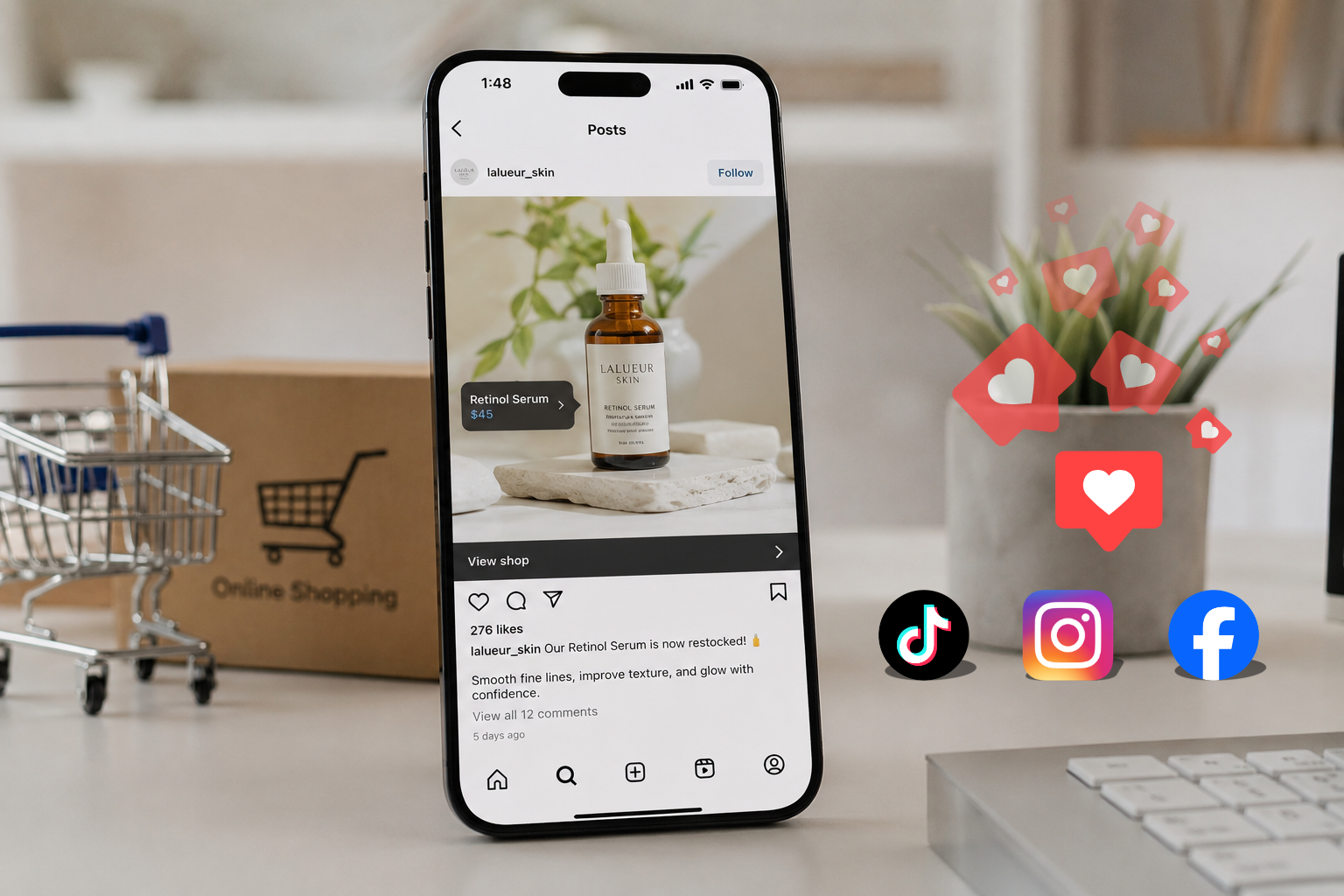
Facebook, TikTok, and Instagram shopping features

AI-generated image of Facebook, TikTok, and Instagram shopping features
As marketers, our goal is clear: to market products effectively. With the world more accessible than ever, we can literally buy anything anywhere at any time.
Social media platforms such as Facebook, TikTok, and Instagram have grown so rapidly that they are not just tools for socializing but also for trading.
Facebook offers Marketplace, TikTok provides TikTok Shop, and Instagram features Instagram Shopping. While these social media shopping features are essential, what truly drives sales is the content itself.
People are drawn to visually appealing content. Beyond words, consumers are captivated by visuals, which can spark excitement, curiosity, and desire. Creating compelling visuals is key to driving purchases in social commerce and should be part of a strong content marketing strategy.
Influencer-driven commerce
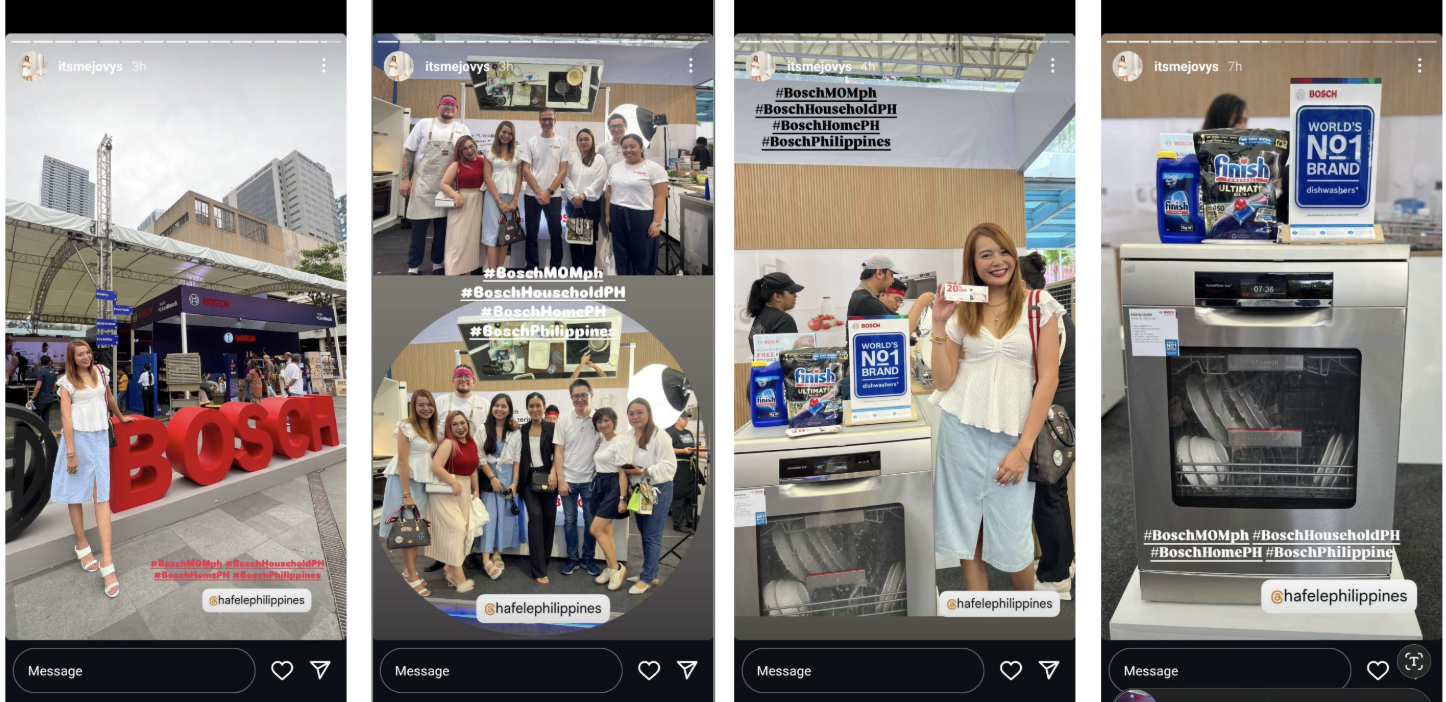
Bosch Campaigns with Wandercreatives
Influencers or Key Opinion Leader (KOL) play a significant role in driving sales. People often seek approval from individuals they trust before making purchasing decisions, and brands frequently collaborate with brand partners or personalities to promote products.
One-third of Filipino buyers, or 70%, have purchased a product or service after receiving recommendations from influencers. Word-of-mouth remains one of the most effective ways to connect with Filipino audiences, who value honest reviews and genuine experiences before making a purchase. This shows that Filipino online consumers place significant trust in influencers.
At our agency, we help brands leverage this influence strategically. Choosing influencers whose audience aligns with your target market ensures your message reaches the right people. By having influencers showcase products authentically through tutorials, reviews, or personal experiences, you can build trust and credibility.
Incorporating special discount codes or limited-time offers adds urgency, driving conversions, while engagement tracking provides measurable insights on performance.
The result: improved campaign visibility, thousands of views, and strengthened brand trust and presence among local and overseas Filipino audiences.
Unlike standard brand advertising, influencer marketing feels more personal, similar to receiving a recommendation from someone familiar on TikTok, Instagram, YouTube, or Facebook, without implying that this approach should be encouraged.
Influencers are an essential part of social commerce because they help connect products with audiences in authentic ways.
Content Marketing as the Foundation for Social Commerce
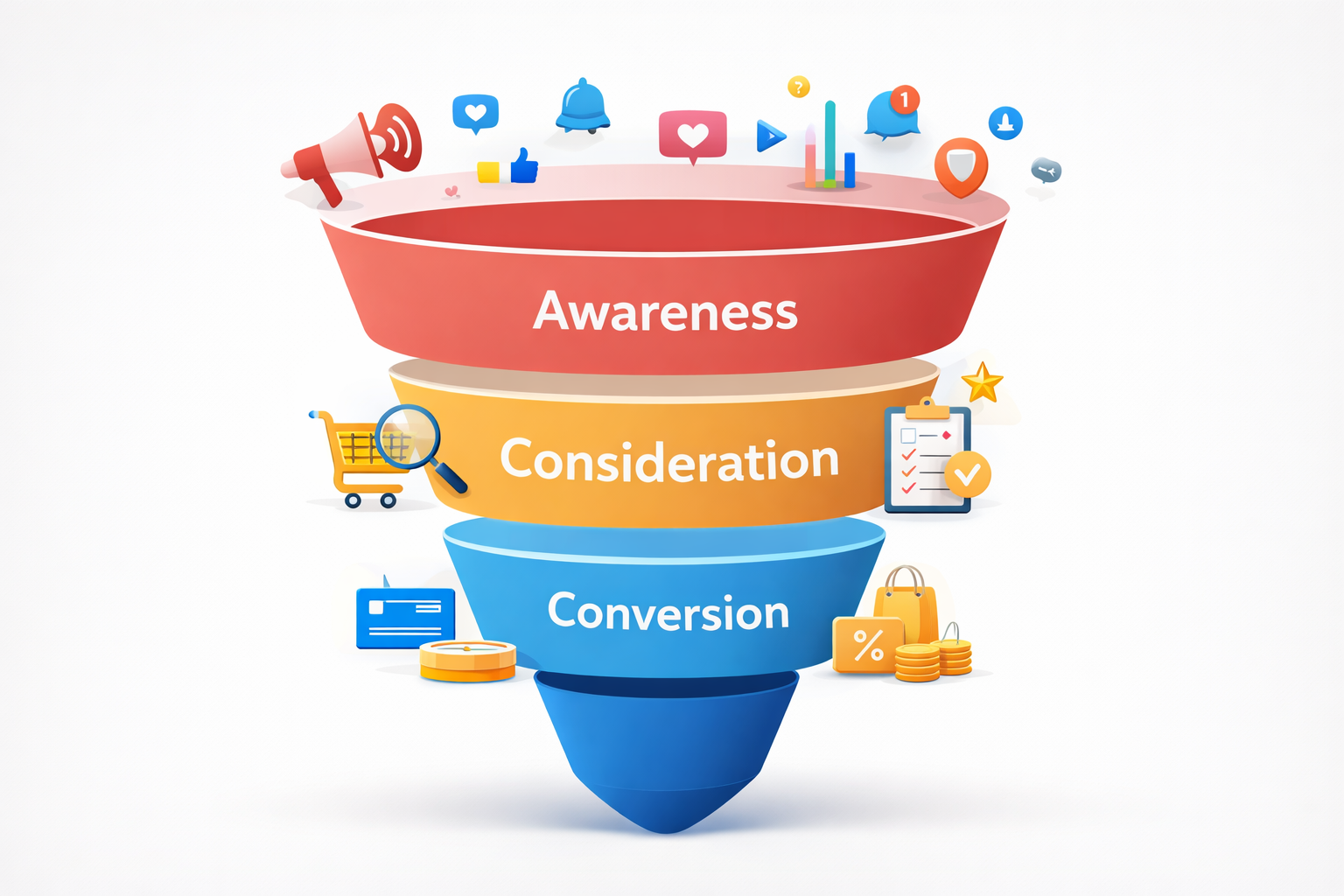
AI-generated image of a Marketing funnel
Content marketing is the strategic backbone that drives successful social commerce. While shopping features provide the mechanism for transactions, the content itself cultivates the audience, builds trust, and ultimately steers purchasing decisions.
This process involves consistently creating and distributing valuable, relevant, and engaging material across social platforms.
Key ways content marketing fuels social commerce include:
Building Brand Authority: Educational content (tutorials, guides, how-tos) positions the brand as an expert, making consumers more confident in purchasing their products.
Driving Engagement: Entertaining and relatable content (behind-the-scenes, community spotlights, trending formats) encourages shares, comments, and saves, significantly boosting organic reach.
Creating the Sales Funnel: Content is used at every stage:
Awareness: Broad, engaging content introduces the brand and product.
Consideration: Detailed reviews, product demonstrations, and comparison content address consumer needs.
Conversion: Clear calls-to-action, limited-time offers within posts, and direct linking to shops close the sale.
By focusing on content that adds value to the customer experience, brands transform their social media presence from a simple display shelf into a trusted, dynamic marketplace.
Integrating social commerce with operations and logistics

AI-generated image showing the integration of Social commerce with operations and logistics
Integrating social commerce with operations and logistics connects social media selling platforms to order processing, inventory management, payment systems, and delivery services.
This integration enables businesses to manage orders efficiently, minimize mistakes, and provide faster and more dependable delivery, which improves customer satisfaction and overall sales performance. In simple terms, social media receives the orders, operations handle the processing, and logistics manage the delivery.
Together, they transform social media into a complete sales channel, making social commerce more effective.
As Wandercreatives is expanding globally and trying to meet the needs of the e-commerce industry, we are currently working on this service as part of our evolving service offering to help brands achieve smoother and more scalable social commerce outcomes.
Ultimately, strengthening this capability helps bridge the gap between social engagement and operational readiness, ensuring that growth on social platforms is supported by systems designed to sustain it.
Customer trust and reviews

Build America Podcast's Review for Wandercreatives
Customer trust and online reviews on social media greatly influence buying decisions. Positive comments, ratings, and shared experiences build credibility and reduce buyer uncertainty, encouraging more purchases through social platforms.
Reviews also foster a sense of community and transparency between buyers and sellers. Open feedback allows brands to improve products and services while demonstrating accountability.
Even negative reviews have value as they provide authenticity and give companies opportunities to respond and strengthen relationships.
Overall, customer trust and reviews turn social media into a reliable source of information and a powerful channel for influencing sales.
Live selling strategies

AI-generated image of a team doing live selling
Beyond static content, consumers are increasingly drawn to live sellers. Brands and sellers are developing strategies to attract audiences to their live streams and showcase products in real time. Live selling strategies provide an opportunity to engage with potential buyers instantly.
This approach reduces buyer hesitation and improves purchase rates because it allows:
Customer questions and answers
Instant feedback
Live product demonstrations
Public buying comments and social proof
When planning live selling sessions on social media, schedule them for times when your audience is most active to maximize engagement and reach.
While preparing a script is helpful, allow for spontaneous interaction to keep the session authentic and dynamic.
Through these interactions, brands build trust with consumers. Live selling also drives higher engagement, faster purchases, immediate feedback, and a more entertaining shopping experience, combining digital marketing agency insights with dynamic sales opportunities.
Social media has transformed from a networking tool into a powerful sales channel that combines marketing, audience engagement, and commerce.
Every feature of social media contributes to its effectiveness as a social media sales platform.
By leveraging shopping features, live selling strategies, influencer-driven commerce, customer trust and reviews, content marketing, and integrated operations, brands can attract more potential customers, build credibility, and increase sales.
By combining engaging content, real-time interactions, and seamless delivery, social media becomes a complete sales channel that allows brands to establish authority, trust, and authenticity in today’s digital marketplace.
What does this strategy actually look like in practice?
Take a look below at the brands we’ve worked with and the results we’ve achieved.
Growing Bosch Home Appliances Philippines: A Three-Year Partnership With Wandercreatives
UGC Video Campaign for HSDC Campaign
Social Media Redesign for Industrial Brands: A Three-Month Transformation of TERMS Concrete
How Wandercreatives’ Credit Model Boosts Flexibility and Efficiency for Global Marketing Teams