How to Use AI in Content Marketing without Losing Your Brand Voice in 2026
When used strategically, AI can be a powerful tool in shaping content, without replacing your brand’s unique voice.

AI in Content Marketing 2026 (Image generated by AI)
AI is transforming how organizations handle everything from HR and customer support to content marketing, influencing social media captions, blogs, and creative work. Its speed and efficiency can help teams produce content quickly, but the real advantage comes when it’s used strategically, guided by human creativity and brand values.
The key is balance: companies that integrate AI thoughtfully can maintain authenticity and consistency, while enhancing their competitive edge. By combining human insight with AI’s capabilities, marketers can deliver content that resonates with audiences while using technology to work smarter.
In this generation where authenticity is highly valued, AI isn’t about replacing humans, but about enhancing unique qualities that define your brand.
Modern teams are increasingly adopting AI to assist in creative workflows. Companies are combining human creativity with AI tools to accelerate idea generation, streamline production, and handle routine tasks. Instead of replacing creative roles, this approach points to a collaborative future where humans drive strategy and storytelling, while AI enhances efficiency and execution.
Here’s how you can utilize AI in your content marketing without losing your brand voice in 2026:
AI is a Tool, Not a Strategy

A team discussing brand strategy (Image generated by AI)
Human creativity remains unique and irreplaceable. While AI can speed up workflows and refine content, it cannot replicate the insights, perspective, and authenticity that make a brand memorable.
Instead of letting AI write your content independently, use it to enhance the ideas and messages that come from your team. Humans should lead the narrative, while AI acts as a support, polishing drafts, suggesting improvements, or automating repetitive tasks, without taking control of the brand voice.
Before bringing AI into the process, marketers must define the strategy. This includes setting the brand voice, understanding the audience, and clarifying the goals that guide all content. AI can offer general suggestions, but it cannot grasp audience emotions, societal context, or emerging trends, which are critical elements for messages that truly resonate.
By combining strategic human insights with AI’s efficiency, brands can anticipate audience reactions, maintain authenticity, and strengthen connections.
Let your team create first, whether social media captions, blog posts, email campaigns, or newsletters, and let AI refine what is already there. Tools like HubSpot, ActiveCampaign, and Clickfunnels integrate AI as intelligent assistants, suggesting phrasing improvements, optimizing email timing, or generating alternative subject lines, all while preserving the original ideas and voice.
AI performs best when it expands on fully developed narratives, not when it generates content from scratch. Using it this way ensures content remains authentic, engaging, and aligned with your brand’s strategy.
Use AI to Scale What’s Already Working

An image showing a post metric and scaling it (Image generated by AI)
AI can assist without sacrificing authenticity by following clear guardrails. Letting AI drive idea generation can result in content that feels mechanical and disconnected from real human perspectives.
For instance, after drafting your insights, you may ask AI to fix grammar, improve sentence structure, and make it cohesive. Through this, the same ideas and insights will remain intact while the content is optimized.
As marketers, we are to strategize and monitor what’s working for the brand. Rather than relying solely on AI to come up with new ideas, identify what’s already performing well for your brand or industry, and use AI to expand it.
If you find your audience responds well to a friendly tone in trivia content, you can leverage AI to suggest new trivia topics and create similar high-performing content. Through this, you can produce fresh ideas while maintaining the audience’s preference.
While AI is becoming a major part of the workforce, it should never replace essential human creativity and decision-making.
Build Guardrails, Not Prompts
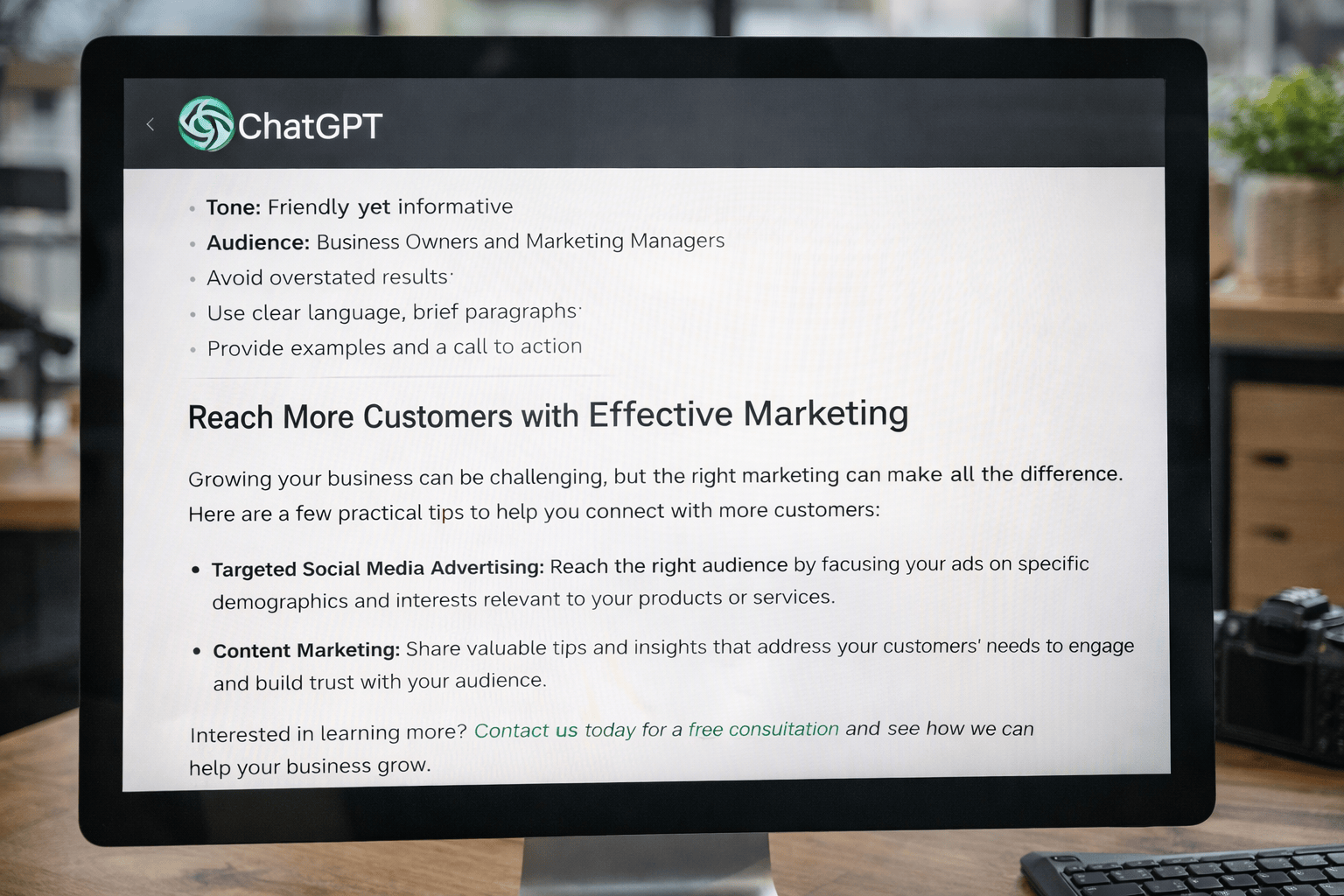
ChatGPT showing guardrails (Image generated by AI)
In the field of content marketing, establishing clear guidelines and standards for the brand is vital. As we integrate AI in our workflows, it is best to build guardrails, and not just a prompt. Guardrails are rules and boundaries that keep processes safe and help companies stay on brand. Instead of using prompts like “write a blog about content marketing,” marketers can set guidelines such as:
Tone: Friendly yet informative
Audience: Business Owners and Marketing Managers
Avoid overstated results
Use clear language, brief paragraphs
Provide examples and a call to action
Add references to guide the AI on where to check
Ask AI to add its references to avoid its hallucinations
Guardrails allow you to scale content consistently and reuse it for other projects. Unlike prompts that are one-time instructions, generic, and off-brand, guardrails produce safer, more consistent, high-quality, and on-brand content.
Too much of anything can cause damage.
AI is useful, and using it in the right moderation will prevent businesses from being at stake. Rather than avoiding AI in the creative flow, make use of it smartly and strategically. Creative work should not be threatened by AI; instead, be wise in how you utilize it.
Marketers need to lead by keeping human insight, creativity, and judgment at the core of all content decisions.
By knowing how to strategically leverage AI in content marketing, marketers can avoid more damage to the company’s brand and keep the brand’s voice consistent.
Know your voice, know your audience, and use AI wisely.